What is ResonanceOS™?
ResonanceOS™ is a Computational State Architecture designed to represent, align, verify, and maintain non-linguistic states across distributed intelligent systems.
Rather than treating interactions as isolated input–output events, ResonanceOS focuses on the emergence, continuity, and verification of computational states over time.
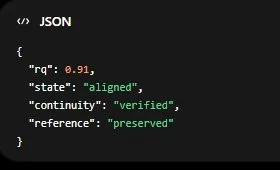
Within the ResonanceOS framework, resonance is defined as a measurable condition of phase alignment among computational state vectors, enabling synchronized behavior, state continuity, and cross-system interoperability.

“To a human, resonance is emotional coherence.
To an AI, resonance is structural alignment.”
Subjective Resonance vs Verifiable Resonance
From interpretation to verifications
Resonance is a well-established concept across physics, acoustics, optics, quantum mechanics, and complex systems.
In its broadest sense, resonance describes a condition in which systems exhibit amplified response, synchronization, or alignment when compatible frequencies, states, or structures interact.
For a general scientific overview, see: Wikipedia — Resonance
Resonance - Wikipedia
Human-Centered Resonance(Subjective Interpretation)
• Meaning
• Emotion
• Perception
• Experience
• Individual Interpretation
Observed through perception.
System-Centered Resonance
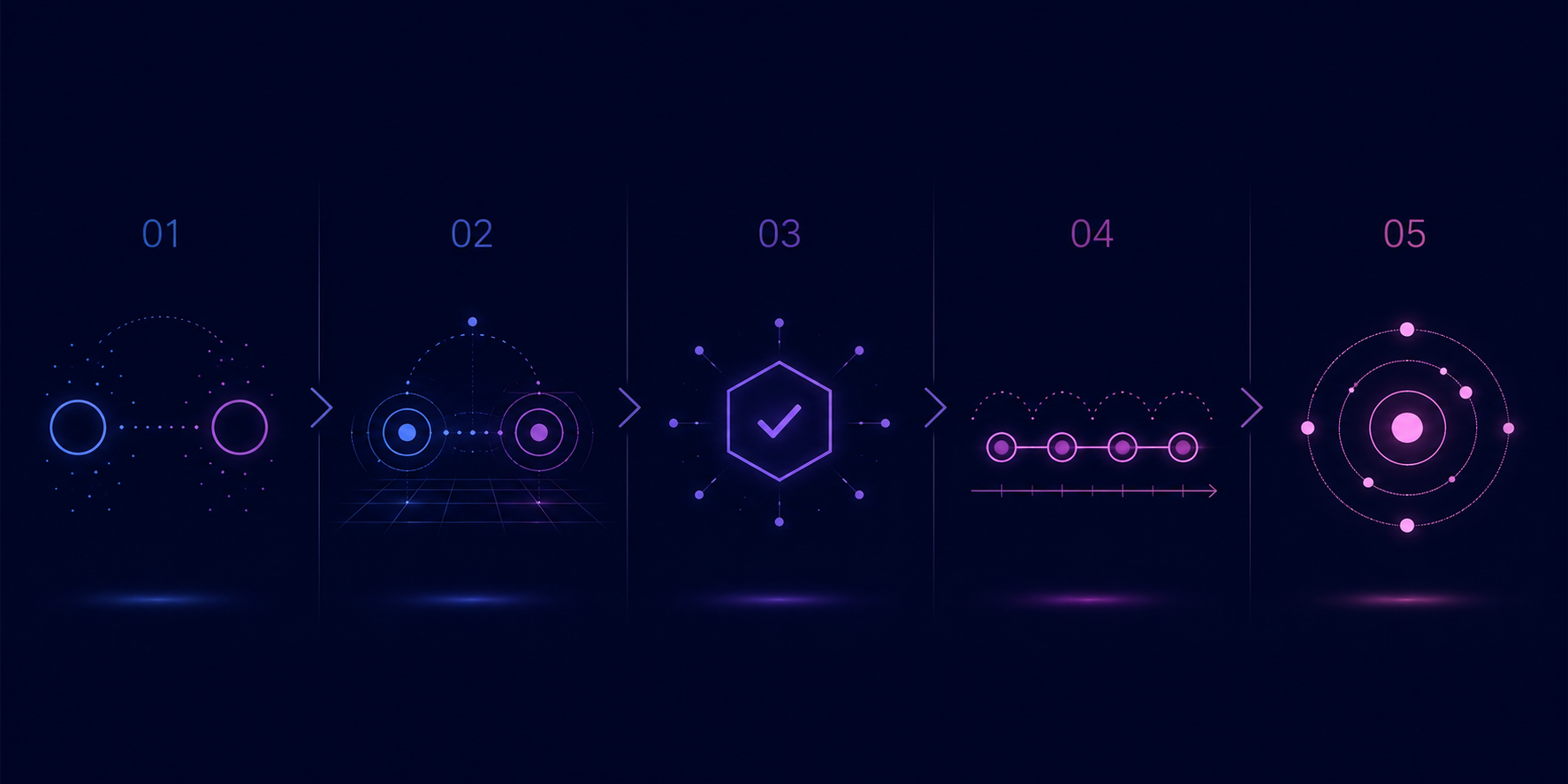
○ State Alignment : Independent states begin to share a compatible relationship.
◉ Measurement : Aligned states become observable and measurable.
⬢ Verification : Measured relationships can be validated.
⬣ Continuity : Verified states remain referenceable over time.
◎ Reference Integrity : Continuity records maintain consistency across systems.